
Neuro-inclusive spatial learning.
Eupheus translates physical, gesture-based play into verified academic progress for children with diverse learning needs, bypassing the sensory barriers of traditional wearable headsets.
From engagement to mastery.
How learning works
Why this approach works
Built on proven learning principles
Evidence-driven learning: every session produces measurable data, not just activity.
15 PEER REVIEWED RESEARCH PROVES AR LEARNING DOES HELP CHILDREN WITH DYSLEXIA, AUTISM AND ADHD
Learning principles: multisensory learning, retrieval practice, spaced repetition, immediate feedback, active recall.
Speech and phonics loop: see it, hear it, say it, correct it.
Personalisation: pacing, difficulty, and prompt adaptation based on learner response.
■ Unique Pedagogy

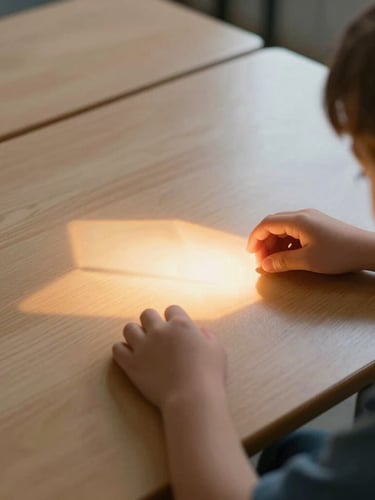
Adaptive sensory profiles.
Our system dynamically recalibrates visual contrast, interaction speed, and audio cues to accommodate specific neurodivergent learning styles in real time.
Dyslexia Adaptations
Visual adaptations focusing on high-contrast spatial 3D typography and phonological colour-mapping.
Autism Adaptations
Sensory-friendly interfaces with predictable gesture mappings and zero high-frequency auditory triggers. No headsets and wearable goggles.
ADHD Adaptations
High-frequency physical feedback loops designed to maintain focus through active, kinetic engagement.
EAL Adaptations
Dual-coded visual cues linking spatial objects directly to vocabulary acquisition pathways.
■ SEND Adaptations
The CMRR learning cycle.
Every Eupheus lesson is programmatically structured around four distinct cognitive phases, moving students from initial exposure to independent recall.
The Eupheus mascot, Lumi, guides students through personalized modules, offering soft visual prompts that keep learners engaged and calm.
From active gesture to objective proof.
Comprehension
Memory
Retention
Recollection
Active physical gesture maps abstract concepts to concrete spatial light forms.
Adaptive AI pacing algorithms revisit critical concepts at optimal cognitive intervals.
Multi-sensory reinforcement embeds spatial coordinates alongside semantic data.
Independent physical recall exercises verify mastery without testing anxiety.
Our system silently maps every physical interaction against four cognitive stages: Comprehension, Memory, Retention, and Recollection. SENCOs receive clean, structured evidence without lifting a pen.
■ Credibility
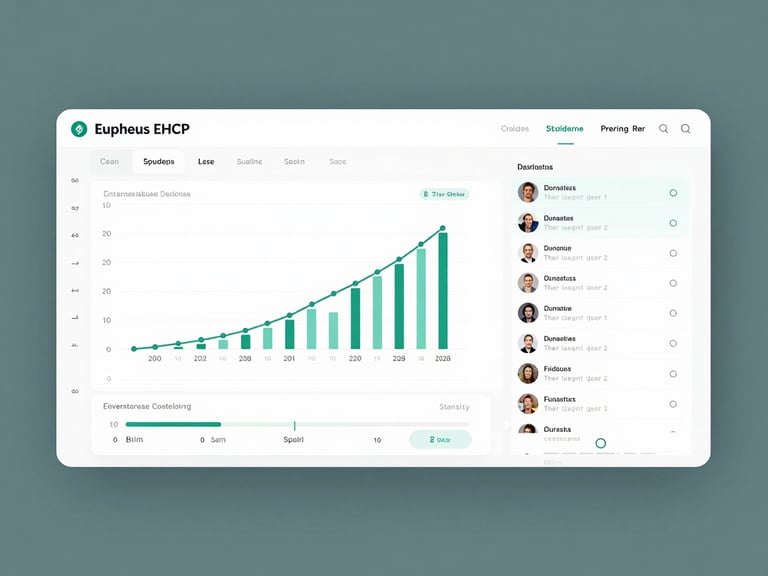

Objective compliance data.
A clean, secure portal displaying real-time progress metrics, milestone tracking, and standardized observation logs formatted specifically for council SENCO submissions.
Automated EHCP evidence.
While students engage with spatial projections, Eupheus silently records objective performance metrics, auto-generating structured evidence packs for scheduled annual reviews.